At rush hour.
Illuminated markings and guidance adapted to use can help teams organize traffic, parking and access.
 BEYOND SUSTAINABLE TECH
Artificial intelligence is advancing. To manage our cities better, it also needs reliable data to organize movement, anticipate interventions and respond to events.
Step into tomorrow’s city ↓Water collects. Heat rises. A surface deteriorates. When information is missing, teams must inspect, estimate and then intervene. Residents live with the consequences.
The question for cities: how do we move from reacting to making better-informed decisions?
To act at the right time,
we need to observe the right place.
Imagine a street whose illuminated markings support a change in traffic flow. A parking area that guides arrivals. An access route that teams can reconfigure during an incident or an event. Roads, lanes, sidewalks and platforms become assets that can be observed, adapted and managed.
Illuminated markings and guidance adapted to use can help teams organize traffic, parking and access.
Connect field alerts to AI tools to propose a response, mark an affected area and support team coordination.
Combine module condition, history and local conditions to identify changes and prepare targeted maintenance.
Water, frost, ice and heat are also part of this operating picture. Intended use cases require qualification with operators, who retain control of decisions and traffic changes.
Watch the full smart-streets film ↗Our ambition is to become a leading source of infrastructure data by building the assets that can generate it. Connecting materials, modules, measurements and AI tools through one industrial development path.
A useful asset designed to accommodate sensing and remain accessible.
Field measurements that become more valuable when they are reliable, comparable and tracked over time.
A foundation for monitoring, decision support and maintenance, developed with operators.
For investors, the opportunity is to fund deployment capability that can enable recurring services. The commercial model for those services remains to be validated with customers.
Data rights are agreed with infrastructure owners and operators. The intended value comes from understanding assets and how they function.
Municipalities, parking managers and site operators: start where access, works or interruptions create a concrete problem.
Simplify work on one section, adapt access and reuse modules. A pilot must quantify the benefit against the customer’s existing solution.
Validate a budget, a decision-maker, procurement requirements and an initial site. Identified needs open a sales conversation; they are not yet urban orders.
Compare installation, maintenance, disruption and replacement costs, then reuse value, against the BST system, operating and service costs. Establish the benefit on a site with the customer’s data.
For BST: module sales or rental, then potential monitoring and services. Pricing, margins, recurring revenues and deployment costs must be validated before projecting investor returns.
Our ambition: an initial service life of 15 years or more, depending on use, followed by redeployment suited to the module’s condition. A section could move to a parking area, another access route or a work platform. At end of life, material recovery and return to manufacturing are part of the pathway to qualify.
Each module would carry its history: manufacturing, installations, measured loads, inspections and interventions. This record should inform where to reuse it, when to repair it and when to retire it. Target service life and redeployment criteria remain to be validated.
XtremeM is our starting point: reusable, one-piece rotationally moulded modules for temporary roads and work platforms. Manufacturing and operating experience on difficult terrain gives this ambition an industrial foundation.
Watch XtremeM: demonstration and tests ↗modules manufactured annually¹
existing module use, as reported by management¹
demonstration and test benchmarks available
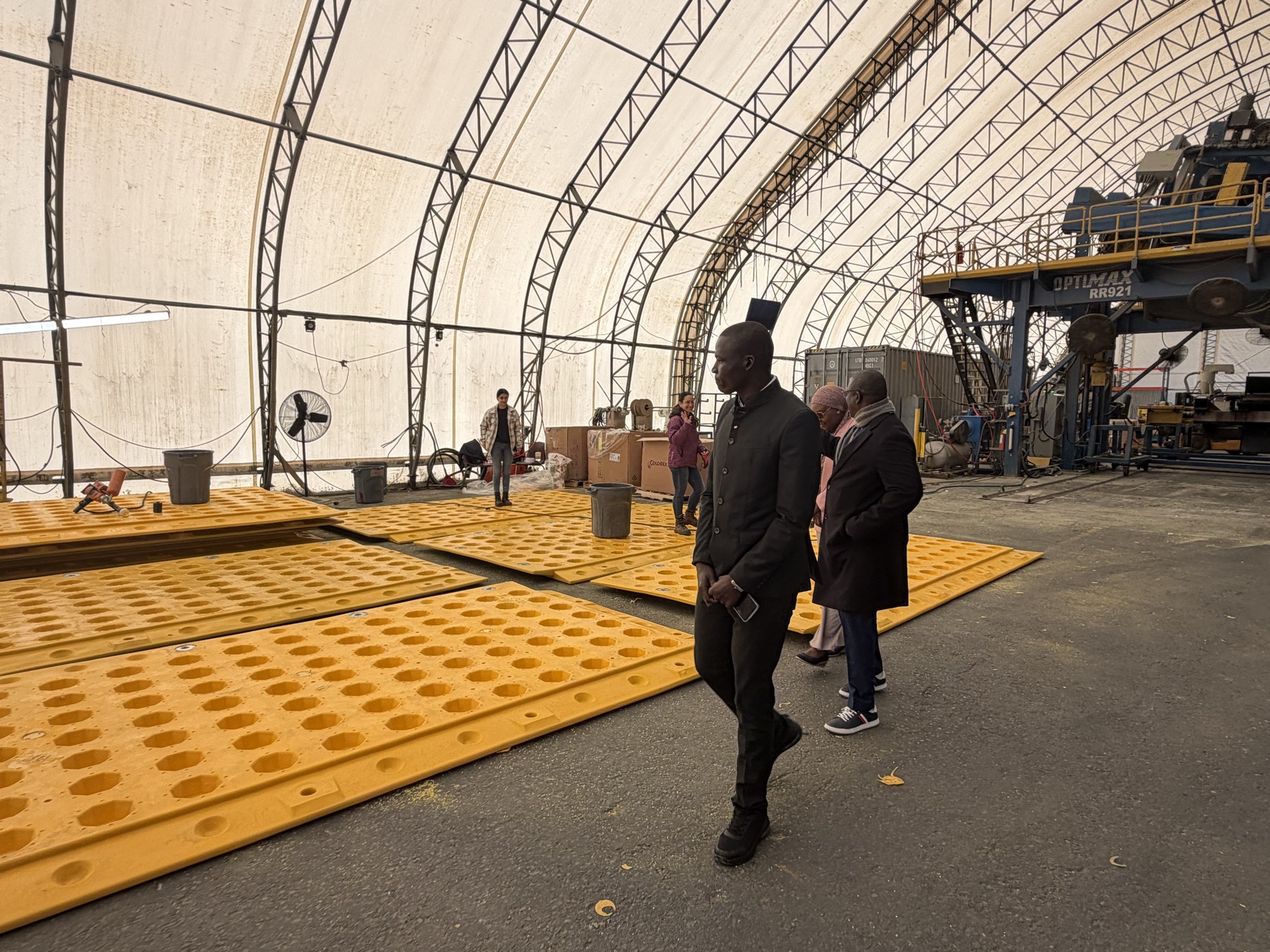
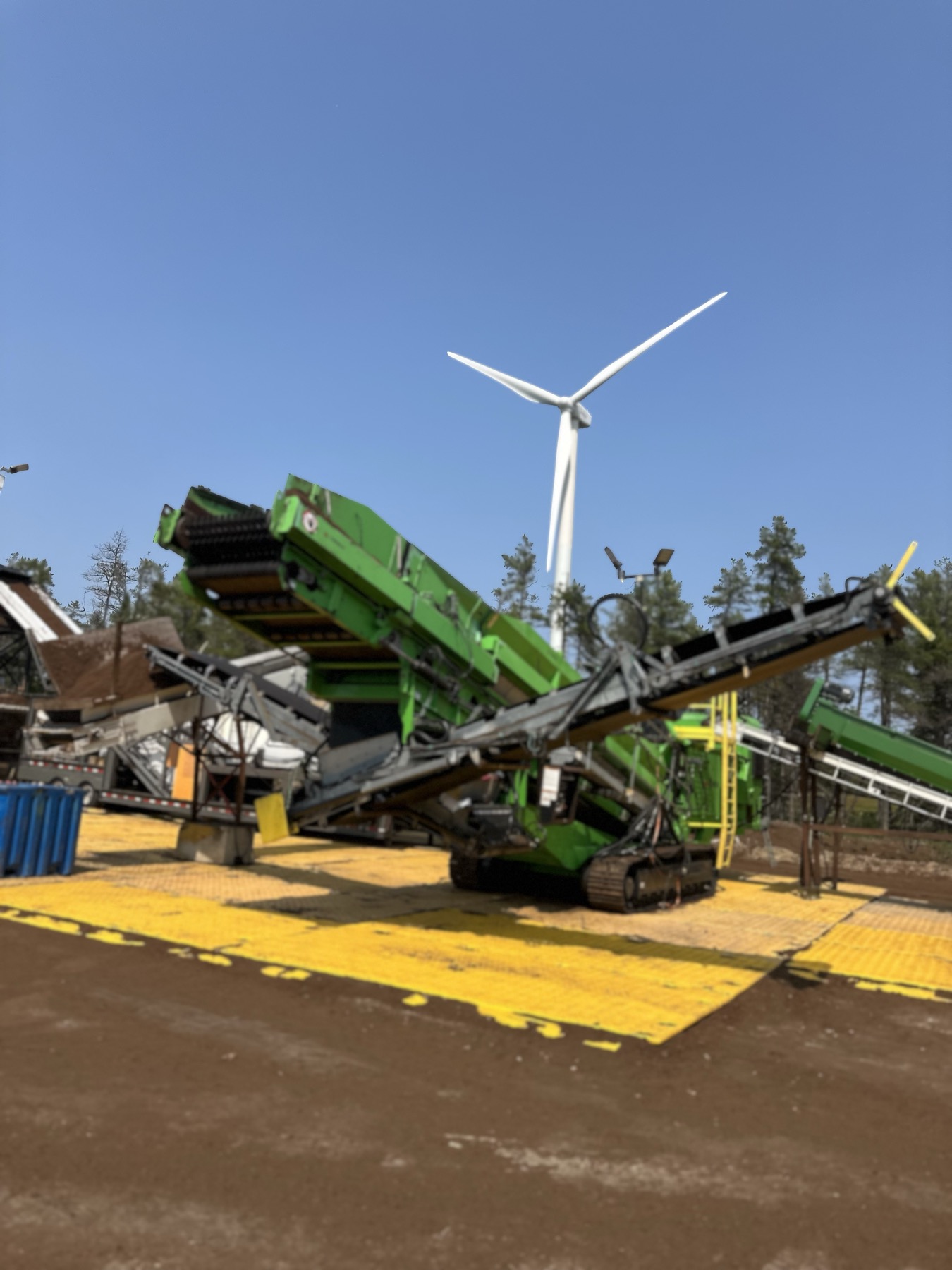
The industrial experience behind the vision. ¹ Information provided by Alain Bélanger on October 13, 2026, concerning existing industrial businesses. It does not represent consolidated BST revenue or deployment of the urban functions illustrated.
Start with a city and a measurable use case. Demonstrate value. Replicate what works. Then extend the approach to ports, industrial sites and other places that need more useful infrastructure.
We seek investors and partners who share this ambition: connect industrial experience with a new generation of intelligent cities.
Explore our investor experience ↗Let’s discuss the ambition ↗XtremeM: see the product page for test results and conditions. Encapsulation of orphan plastics through rotational moulding is described by management; formulations require qualification for each use, including abrasion, leaching and end of life. A 15–20 year life is a design target. Connected functions, savings, service revenues and environmental benefits require field validation. AI already processes real-time streams; BST’s ambition concerns access to reliable infrastructure data. Affordable monocoque housing remains a later development horizon.
UNEP attributes around 37% of energy- and process-related CO₂ emissions to buildings and construction. This figure does not represent roads alone or BST’s impact. UNEP source.